

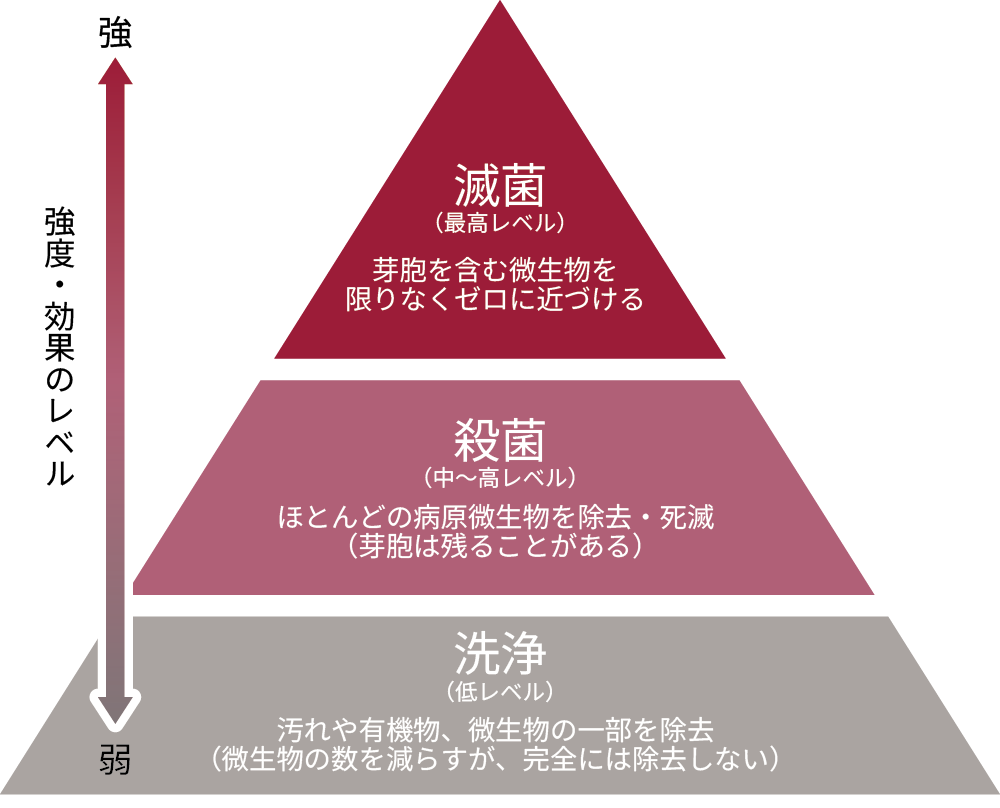
Cleaning
Simply removing dirt with detergent or ultrasonic cleaners. This is a task that must be performed before sterilization or sterilization.

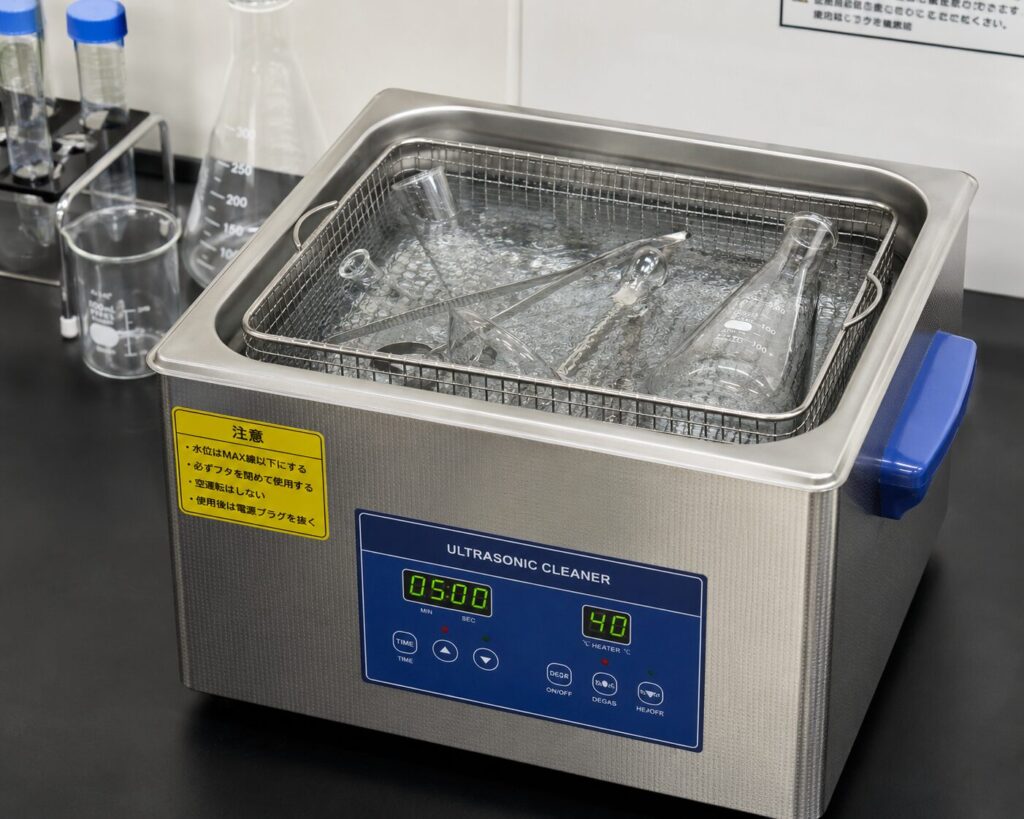
Sterilization (disinfection)
It cannot kill all bacteria, but it reduces the number of microorganisms. The microorganisms that can be killed vary depending on the disinfectant used.

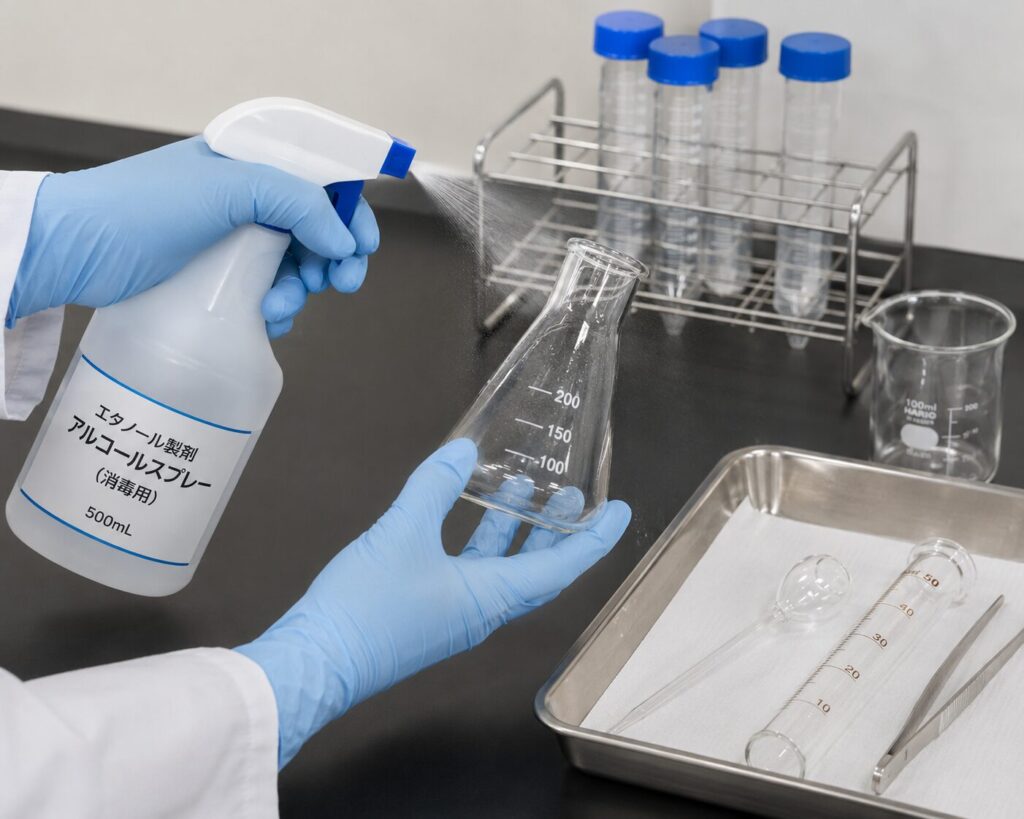
Sterilization
Bringing microorganisms, including blastocysts, infinitely closer to zero.

Sterilization is not just about "what ℃ how many minutes it took to sterilize." The reason is more than the following:
・The heat resistance varies depending on the type of fungus
- The rate of temperature rise varies depending on the size and amount of sterilized items
・The actual sterilization effect differs even at the same sterilization time
Therefore, the idea of D-value, Z-value, and F-value is used to objectively evaluate the sterilization effect.
These figures allow us to calculate the sterilization time, which varies depending on the microorganisms being sterilized, using a formula.
What is the D value
The D value (Decimal Reduction Time) refers to "the time required to reduce microorganisms by 90% (an order of magnitude) at a given temperature."
This varies depending on the microorganisms being sterilized. For example, if the D value is 1 minute in 121℃ in an autoclave..
| Time | Number of viable bacteria |
| At the start | 1,000,000 pieces |
| 1 minute later | 100,000 pieces |
| 2 minutes later | 10,000 pieces |
| 3 minutes later | 1,000 pieces |
| 4 minutes later | 100 pieces |
This will be the case.
In other words, the D value is an indicator of how quickly the bacteria die.
The table below shows the D values when sterilized with 121℃ of representative microorganisms.
| fungal species | D121 (min) |
| Bacillus cereus | 0.007 |
| Bacillus atrophaeus | 0.5 |
| Geobacillus Stearothermophilus |
2.0 |
| Sporogenes | 0.8-1.4 |
| Clostridium botulinum | 0.204 |
A high D value means that it takes a long time to reduce the number of microorganisms by one-tenth.
This means it is highly heat resistant and difficult to kill.
The highest D value in the table is Geobacillus stearothermophilus.
This represents that if sterilized with 121℃, it would take 2 minutes to reduce the bacterial count by 10 times.
What is the Z value
The Z value is the "temperature increase required to bring the D value to 1/10". For example..
| temperature | D value |
| 111℃ | 10 minutes |
| 121℃ | 1 minute |
| 131℃ | 0.1 minutes |
In this case, the Z value is 10℃. This means that increasing the temperature by 10℃ will increase the sterilization power by 10 times.
Conversely, if the value drops by 10℃, it will take 10 times longer to achieve the same sterilization effect.
What is the F value
The F-value represents the "overall sterilization effect evaluated by combining temperature and time."
It's like an accumulation point that shows how much sterilization effect has accumulated.
For example, 121 ℃10 minutes and 131 ℃1 minute
These have roughly the same sterilization effect, both with an F₀=10.
The higher the F value, the greater the sterilization effect.
The simple formula for calculating the F value (F₀ value) is as follows:
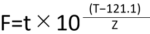
F: Sterilization effect equivalent to F value (121.1℃
t: Holding time at that temperature (minutes)
T: Sterilization temperature (℃)
Z:Z value (usually 10 in autoclaves℃)

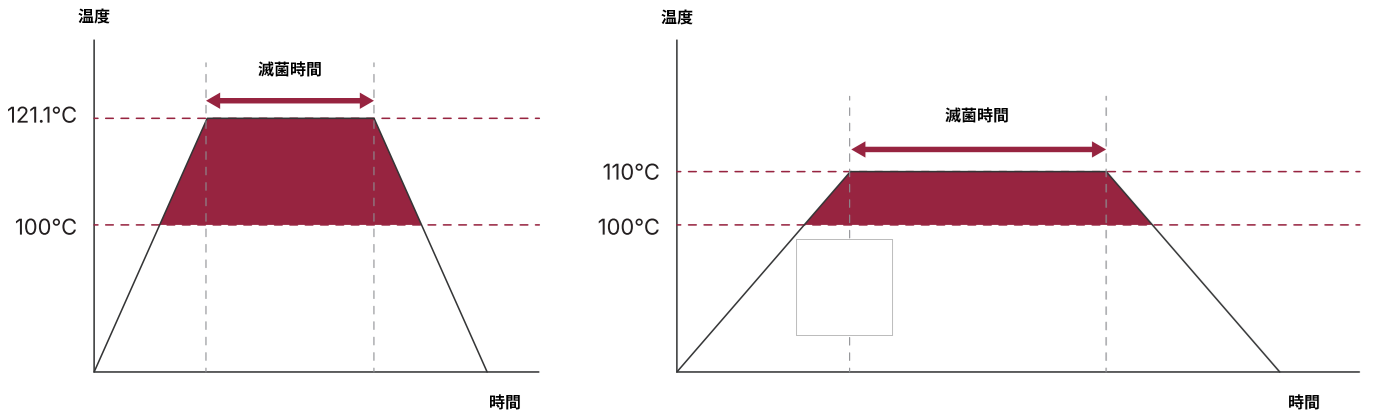
Relationship between D, Z, F, and SAL
Assume there are 1 million (10⁶) bacteria before sterilization.
To achieve SAL10⁻⁶, it needs to be reduced to 10⁶ → 10⁻⁶. This represents a 12-digit decrease.
If the D value at 121℃ is 1 minute, then 1 minute is one order of magnitude less, so 12 minutes is required for a 12-order decrease.
This is why F₀=12 is often used in medical devices and high-level sterilization.
Summary
■ D value → Speed at which the fungus dies (varies depending on the type)
■ Z value → Change in sterilization power with temperature
■ F value → Actual sterilization effect obtained
■ SAL → Final sterility guarantee level
Even with sterility assurance levels like SAL, D-values, Z-values, F-values, etc., microorganisms are invisible, so it is not possible to determine whether sterilization has actually been achieved.
Therefore, there is a way to visually confirm whether or not sterilization is possible.
Sterilization visualization parametric release
This is a method for verifying and determining whether sterile materials meet the required sterilization conditions.
For example, if the sterilization conditions are met, which are specified as one criterion in ISO/TS 17665-2, 121℃15 minutes, then theoretically, it can be determined that microorganisms have died.
This allows for the elimination of sterility testing.
The idea of visualizing sterilizer operation data and ensuring sterilization effectiveness is a parametric release.
To visualize sterilization in an autoclave, you will need a recorder that can store and view driving data, as well as USB communication capabilities.
Good Manufacturing Practice (GMP) is an essential concept in pharmaceutical manufacturing, and there are also GMP-compatible autoclaves.
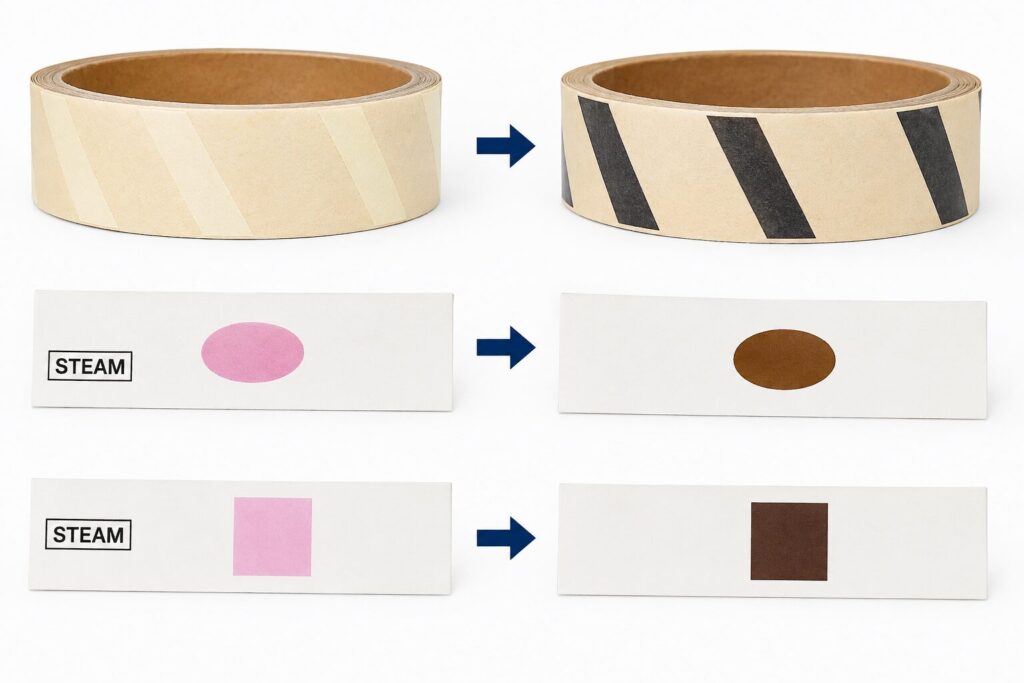
Chemical indicator (CI)
The most common indicator is "color to check whether sterilization is possible." They come in a variety of shapes, including sterile tape and sterile bags with CI. There are two types: one that changes color when it reaches sterilization temperature, and another that changes color with temperature and time.
These chemical indicators are often found attached to the surface of sterilized materials. In that case, it is not possible to determine whether the central temperature of the sterilized item has reached the sterilization temperature. Therefore, it is necessary to attach it to the center of the sterilized item.

Biological Indicator (BI)
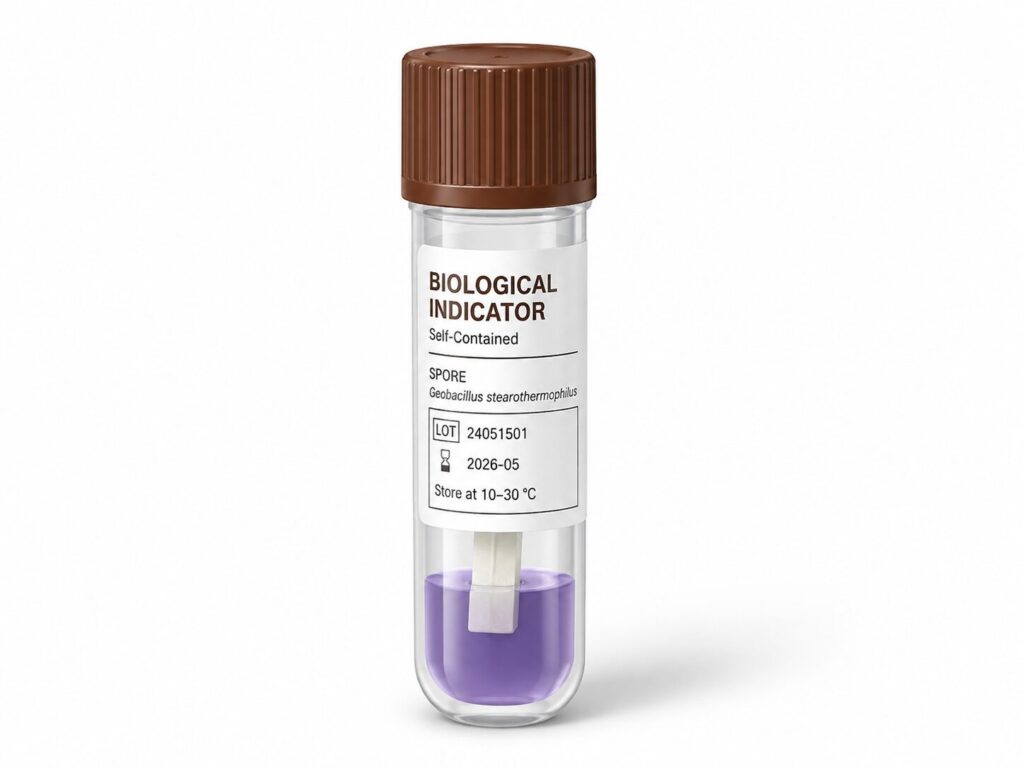
Although it takes time to determine, it is the most reliable indicator. This is a test method that actually uses microorganisms to confirm the sterilization effect. The microorganism contained in BI is typically Geobacillus stearothermophilus, which has the highest rate of death (D value).
Culture medium capsules containing highly heat-resistant microorganisms are sterilized together with sterilized materials, and after sterilization, they are cultured in incubators for 55 ~ 60℃ and 24 ~ 48 hours. If sterilization is reliably performed, the culture medium will not discolor and will be negative. If sterilization is poor, the culture medium will discolor and become positive.
It is a reliable indicator as it uses real microorganisms to verify sterilization effectiveness.
There are various sterilization methods depending on the material, shape, and heat resistance of the object being sterilized.
This section describes the major widely used sterilization techniques, their principles, and the challenges in their application.
High-pressure steam sterilization
Principle: Thermal energy from saturated steam kills microorganisms and blastocysts.
| General conditions | Benefits | Disadvantages |
| 121℃/15~20 minutes 134℃/3~5 minutes |
High sterilization capacity Also effective for blastocysts No harmful substances remain High reproducibility of sterilization effect Short processing time |
Materials that are sensitive to heat are not permitted No electronic devices Concerns about metal corrosion |
Dry heat sterilization
Principle: High-temperature air kills microorganisms.
| General conditions | Benefits | Disadvantages |
| 160℃/120 minutes 170℃/60 minutes 180℃/30 minutes |
Ideal for glassware Less metal corrosion It can also process oils, fats, and powders Endotoxin inactivation (250 ℃or more)※ |
Materials that are sensitive to heat are not permitted Long time required Large energy consumption |
| ※Destruction and decomposition of dead spores | ||
EOG sterilization (ethylene oxide gas sterilization)
Principle: Gas acts on the DNA of microorganisms, killing them.
| General conditions | Benefits | Disadvantages |
| - | Can be processed at low temperatures (30~60℃) High penetration even in complex shapes Sterilization possible after packaging Can also handle heat-sensitive materials |
Toxic and carries a risk of carcinogenicity Remaining gas removal takes time High cost |
Hydrogen peroxide gas plasma sterilization
Principle: The powerful oxidizing action of vaporized hydrogen peroxide kills microorganisms.
| General conditions | Benefits | Disadvantages |
| - | Low temperature sterilizable Almost no residual toxicity Short cycle Can also handle heat-sensitive materials |
I don't like long tubules Liquids and powders are not allowed Special packaging materials are required High cost |
Radiation sterilization
Principle: It kills microorganisms by destroying their DNA and RNA, making them unable to grow.
| General conditions | Benefits | Disadvantages |
| - | Can be sterilized after packaging For mass production Uniform processing possible |
A dedicated facility is required Difficult to implement in small facilities Potential material degradation High cost |